
Important Heart Health Update
5 Signs Your Heart May Be Missing a Critical Nutrient
(That Most Diets Don't Provide)
Low energy. Brain fog. Poor circulation. Heart concerns that keep you up at night. If any of these sound familiar, your body may be silently crying out for something essential.

In the 1970s, two researchers made a discovery that would change heart health forever.
Dr. Jorn Dyerberg and Dr. Hans Bang traveled to one of the most remote places on Earth—the frozen coastline of Greenland—to study the Inuit people.
What they found there shocked the medical community.
Despite eating a diet incredibly high in fat—mainly from fish, seals, and whales—the Inuit had remarkably low rates of heart disease.
How could a population eating so much fat have some of the healthiest hearts ever studied?

Marine foods rich in Omega-3 fatty acids were central to the Inuit diet
The answer was hiding in the fat itself. It wasn't just any fat—it was a special type called Omega-3 fatty acids.
Specifically, two powerful compounds: EPA (eicosapentaenoic acid) and DHA (docosahexaenoic acid).
These essential fats were protecting the Inuit's hearts, keeping their blood flowing smoothly, and supporting healthy inflammation levels throughout their bodies.
The Modern Omega-3 Crisis
Here's the problem: most of us aren't Inuit fishermen.
Our modern diets are dominated by processed foods, vegetable oils, and grain-fed meats—all of which are high in Omega-6 fatty acids but desperately low in Omega-3s.
The ideal ratio of Omega-6 to Omega-3 in our diet should be around 4:1 or even 1:1. But today, most Americans consume a ratio closer to 20:1—sometimes even higher.
This dramatic imbalance creates a state of chronic inflammation that can affect your heart, brain, joints, and nearly every system in your body.
And here's what makes it worse: your body cannot make Omega-3s on its own. They must come from your diet—or from supplementation.
"Omega-3 fatty acids have been associated with decreased sudden death, both in animals and in humans. On this basis, increased consumption of omega-3 fatty acids has been recommended..."
— American Heart Association, Circulation Journal
Understanding EPA and DHA: The Heart's Essential Fuel
Think of Omega-3 fatty acids as premium oil for your cardiovascular system.
Just like a car engine needs the right oil to run smoothly, your heart and blood vessels need EPA and DHA to function at their best.

EPA and DHA are the two most important Omega-3 fatty acids for heart and brain health
EPA (Eicosapentaenoic Acid) is especially important for supporting healthy inflammation levels and promoting smooth blood flow. It helps keep your cardiovascular system running without friction.
DHA (Docosahexaenoic Acid) is critical for brain health, making up a significant portion of your brain's fatty tissue. It also supports heart rhythm and overall cardiovascular function.
Together, EPA and DHA work as a powerful team—supporting your heart, brain, joints, and healthy aging from the inside out.
5 Warning Signs You May Be Low in Omega-3s
Do any of these sound familiar?

Dry Skin or Signs of Inflammation
If your skin is chronically dry, flaky, or prone to irritation, your body may be telling you it needs more Omega-3s.
Omega-3 fatty acids are essential components of healthy cell membranes. When you're deficient, your skin often shows it first—losing its natural moisture barrier and becoming more susceptible to inflammation.

Brain Fog or Poor Focus
Struggling to concentrate? Feeling mentally sluggish? DHA makes up a significant portion of your brain tissue.
Without adequate DHA, your brain simply can't perform at its best. Research shows that Omega-3s play a crucial role in cognitive function, memory, and mental clarity—especially as we age.
Joint Stiffness or Discomfort
Waking up with stiff joints? Finding it harder to move freely? Omega-3 deficiency may be a contributing factor.
EPA's powerful anti-inflammatory properties help support joint comfort and mobility. When you're low in Omega-3s, your joints may feel the effects of increased inflammation.

Persistent Fatigue and Low Energy
Feeling tired even after a full night's sleep? Your cells may be struggling to produce energy efficiently.
Omega-3s support healthy mitochondrial function—the powerhouses within your cells. Without them, your body's energy production can suffer, leaving you feeling drained and sluggish.

Heart or Circulation Concerns
Worried about your cardiovascular health? This is exactly what Dr. Dyerberg's research addressed decades ago.
Omega-3s support healthy blood flow, normal heart rhythm, and balanced triglyceride levels. If you're concerned about your heart health, ensuring adequate Omega-3 intake is essential.
What Decades of Research Confirm
According to the Young Again Research Team, Omega-3 fatty acids are among the most studied nutrients in the world.
Since Dr. Dyerberg's groundbreaking discovery, over 30,000 scientific studies have examined the effects of EPA and DHA on human health.
"Fish consumption is associated with reduced coronary heart disease (CHD) death in populations and in high-risk individuals. Higher fish consumption may also benefit depression and inflammatory diseases."
— Journal of the American Medical Association (JAMA)
The evidence is overwhelming: Omega-3 fatty acids are essential for optimal health—yet most people simply don't get enough from diet alone.
That's why smart supplementation has become one of the most recommended strategies by health professionals worldwide.
If Your Body Is Lacking These Essential Fats, Here's What You Can Do
The good news? You can start supporting your heart, brain, and overall health today with high-quality Omega-3 supplementation.
But not all Omega-3 supplements are created equal. Purity, potency, and absorption matter tremendously.
Discover the Solution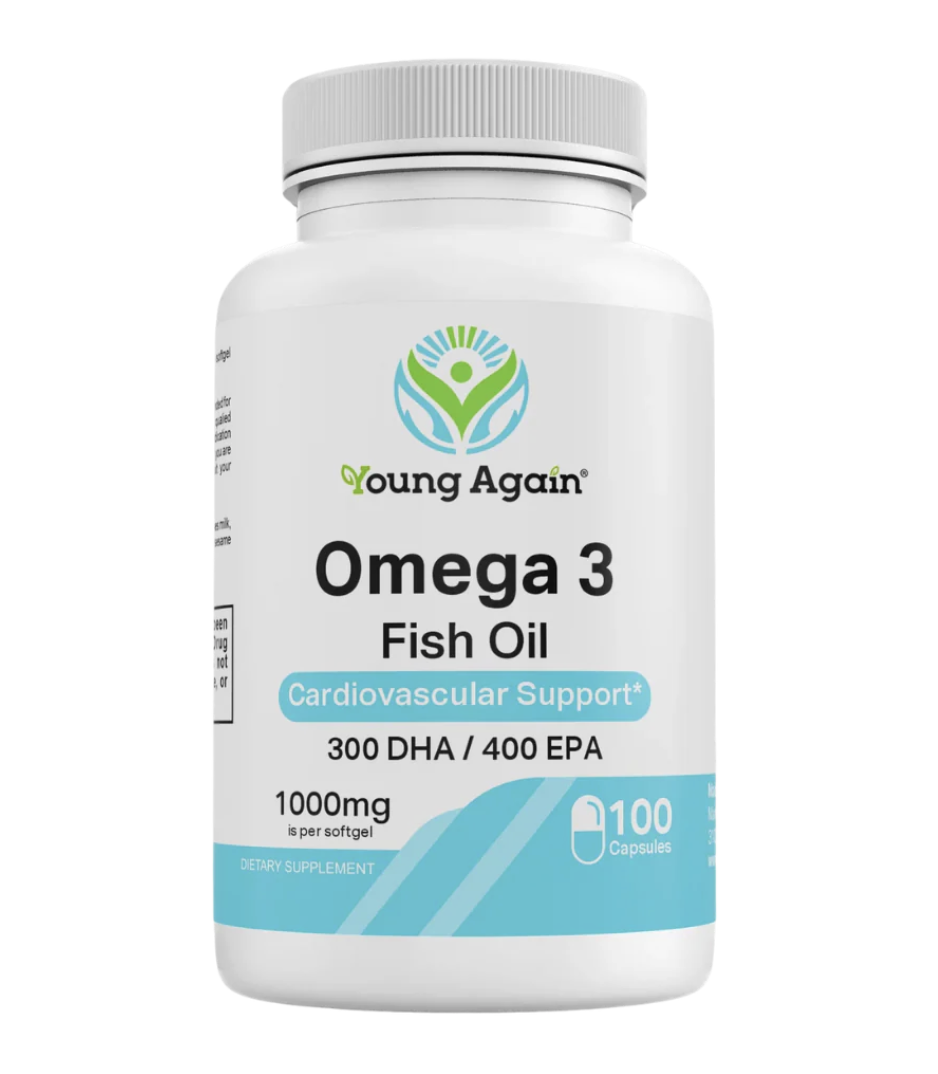
Introducing
Young Again Omega-3 Fish Oil
A premium, purified fish oil delivering optimal levels of EPA and DHA to support your heart, brain, and overall wellness.
- 1000mg per softgel with 400mg EPA + 300mg DHA
- Molecularly distilled for maximum purity
- Sustainably sourced from wild-caught fish
- Cardiovascular support formula
- 100 capsules per bottle
How Omega-3s Support Your Body
Heart Health
Supports healthy heart rhythm, blood flow, and normal triglyceride levels
Brain Function
DHA supports cognitive function, memory, and mental clarity
Inflammation Balance
EPA helps maintain healthy inflammatory response throughout the body
Joint Comfort
Supports mobility and helps ease joint stiffness
Energy Production
Supports healthy mitochondrial function and cellular energy
Healthy Aging
Essential support for longevity and overall wellness
Why Choose Young Again
Premium Purity
Sustainably Sourced
Science-Backed
Made with Care
Frequently Asked Questions
Omega-3 fatty acids are essential fats that your body cannot produce on its own—they must come from your diet or supplementation. The most important Omega-3s for human health are EPA (eicosapentaenoic acid) and DHA (docosahexaenoic acid), which are found primarily in fatty fish and fish oil supplements.
EPA (eicosapentaenoic acid) is particularly beneficial for supporting healthy inflammation levels and cardiovascular function. DHA (docosahexaenoic acid) is especially important for brain health, as it makes up a significant portion of brain tissue. Both work together synergistically for optimal health benefits.
Most adults can benefit from Omega-3 supplementation, especially those who don't regularly consume fatty fish (2-3 servings per week). People concerned about heart health, brain function, joint comfort, or overall inflammation may particularly benefit. As always, consult with your healthcare provider before starting any new supplement.
While individual results vary, many people begin noticing improvements in areas like skin health and energy levels within 2-4 weeks. For cardiovascular and cognitive benefits, consistent daily supplementation over 2-3 months is typically recommended to allow Omega-3 levels to build up in your tissues.
High-quality fish oil supplements are generally considered safe for daily use when taken as directed. However, those taking blood thinners or with certain medical conditions should consult their healthcare provider first. Quality matters—look for molecularly distilled fish oil that has been tested for purity and potency.
Scientific References
- 1. Dyerberg J, Bang HO. "Haemostatic function and platelet polyunsaturated fatty acids in Eskimos." Lancet. 1979;2(8140):433-5.
- 2. Kris-Etherton PM, Harris WS, Appel LJ. "Fish consumption, fish oil, omega-3 fatty acids, and cardiovascular disease." Circulation. 2002;106(21):2747-57.
- 3. Calder PC. "Omega-3 fatty acids and inflammatory processes." Nutrients. 2010;2(3):355-374.
- 4. Swanson D, Block R, Mousa SA. "Omega-3 fatty acids EPA and DHA: health benefits throughout life." Adv Nutr. 2012;3(1):1-7.
Ready to Support Your Heart and Brain Health?
Don't let an Omega-3 deficiency silently affect your health. Discover how Young Again Omega-3 Fish Oil can help you feel your best—from the inside out.
Learn More About Omega-3Free shipping on all orders. Satisfaction guaranteed.